Why Ritual Is a Design Material: The Neuro-Aesthetics of Sanctuary
I. The Anatomy of a Frantic Space
The lighting is stark and unyielding. Screens flicker in competing rhythms, and the route through the room is hard to read. It's unclear where to pause or whom to approach. Most of us know spaces like this: commercial environments that feel less like places to inhabit than physical versions of an endless digital scroll. The body recognizes it before the mind does — tightened shoulders, distracted attention, the pull to get through the experience rather than spend time inside it.
When brands notice this friction, the fix is usually stylistic. They introduce a minimalist color palette, specify a mid-century armchair, or add biophilic accents to a corner. Those choices shape atmosphere, but they dodge the more interesting question — what is a person being asked to do here, and does the experience help them do it? Sanctuary isn't just seen; it's enacted. That's why ritual belongs beside space, material, and language as a design material in its own right — not a garnish on top of the design, but load-bearing.
II. The Mind as a Prediction Engine
Cognitive science increasingly treats the brain as a prediction engine — a framework known as predictive processing. Predictive processing is one way researchers describe how the brain uses past experience to anticipate incoming information. We do this constantly, without noticing: at a restaurant, we scan for where to enter and whether to wait for a host; with a new product, we look for how to open and hold it; on a brand's feed, we learn what kind of attention it tends to ask for.
When cues are unclear, we have to spend more attention figuring out what comes next. That can make an experience feel effortful or uncertain. I am proposing ritual as the design tool that answers this directly. A patterned, repeated sequence, like a cadence for preparing a beverage, or welcoming visitors into a venue, or packaging an online order, can give people a sequence they recognize and a clearer sense of how to participate. When people know where to begin, what to do next, and how to participate, they can spend less attention deciphering the experience and more attention enjoying it.
III. The Somatic Shift: Habit Versus Ritual
For a commercial audience, it's worth separating a habit from a ritual. They aren't the same tool. Habits run on the basal ganglia, largely on autopilot: you can open an app, check email, or wash a dish while your mind spins through worst-case scenarios in the background. A habit doesn't interrupt the pace of anxious thought. It runs alongside it.
A ritual asks for something else: full, cross-modal presence. Because it engages several senses at once — the weight of an unglazed ceramic cup, the warmth spreading up through your palms, the slower breath it takes to inhale rising steam — you're not forcing yourself to stop thinking. You're choosing a structured sensory experience and the action offers a point of focus and a way to mark a transition.
Some studies have found that ritualized actions can reduce reported anxiety or alter responses to uncertainty. How that translates to a designed brand experience remains an open question. We don't need to promise a physiological guarantee to take the idea seriously — only to notice that when you specify a ritual, you're working with the body's own mechanism for downshifting, not against it.
IV. Programming the Threshold
Scaling this from a single moment to a full commercial ecosystem means programming the sequence of movement. Real world-building treats space not as a photograph but as choreography, something lived, in order.
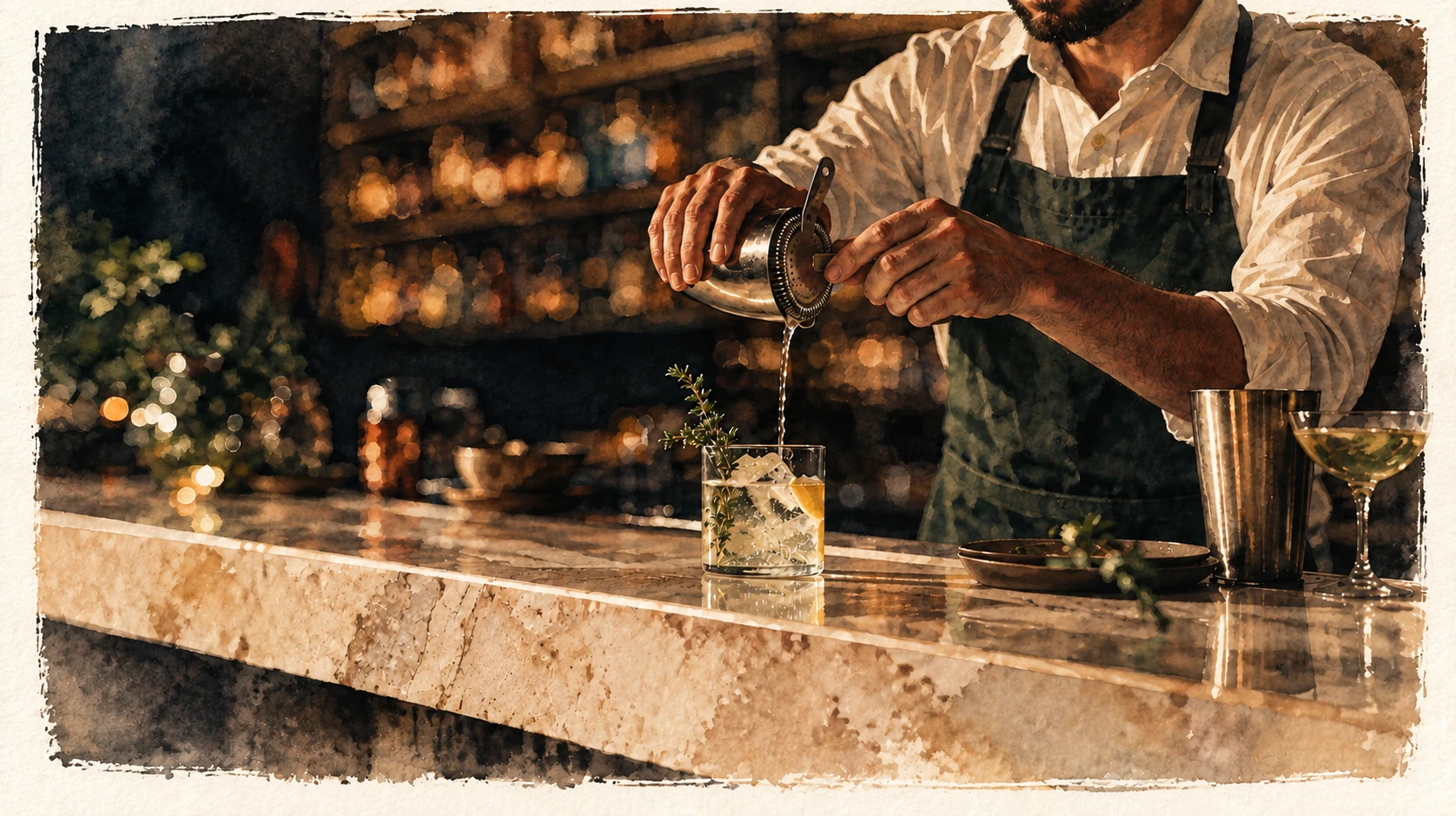
At a restaurant, the ritual can begin before the first course: where the guest is welcomed, what's taken off their hands, whether there's a moment to settle before the menu demands a decision. In a mountain retreat, it can unfold across an entire stay — in The Bindy's proposed guest journey, choosing a vintage record, returning to the music library, and gathering around an evening fire are all ways for guests to participate in the world of the property, not just observe it. I proposed that coffee arrives quietly on the porch in a woven basket; just as a match is struck each evening to start the fire. These aren't amenities so much as signs.
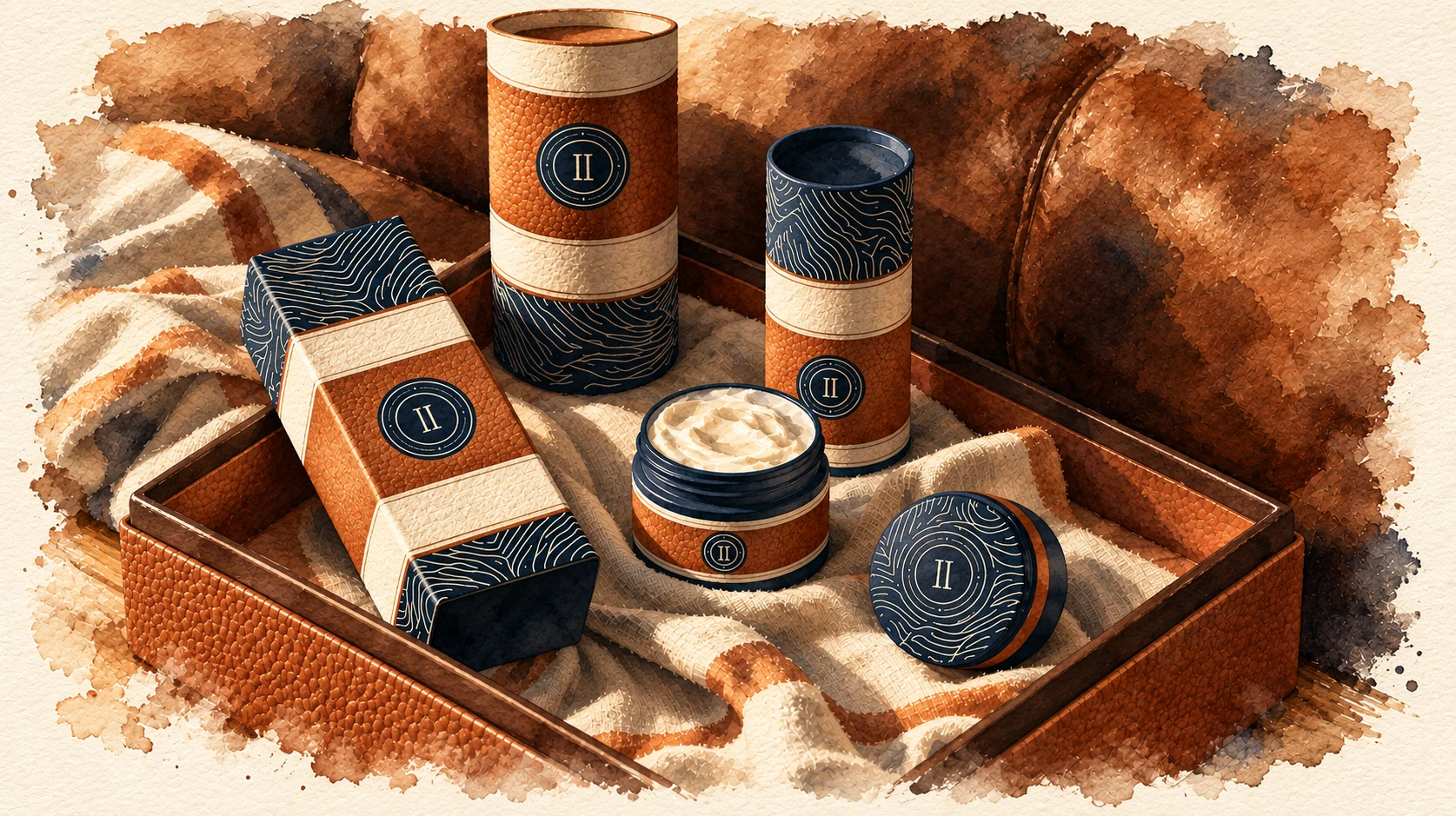
For a product brand, the threshold is the package — how an object is revealed, lifted, and first used. Embodied-cognition research suggests we register the weight, texture, and warmth of a material before we consciously evaluate it, which is part of why stacked fieldstone, raw-grained oak, unglazed ceramic, and plush wool can function as non-verbal invitations to slow down. Material culture becomes the container; ritual is what brings it to life.
V. The Digital Threshold: Sanctuary in the Scroll
World-building doesn't stop where the physical architecture ends. It carries into digital interfaces. The modern feed accelerates non-stop: erratic visuals, shifting type scales, calls-to-action that keep a viewer's prediction engine working overtime. Most brands respond with more of the same instability — posting erratically, changing filters on a whim, shouting into the feed.
The alternative is a digital ritual: a predictable sensory landmark inside the feed. Imagine a lifestyle brand publishing a material study every Sunday morning. One week the surface of a glazed vessel, the next the weave of a textile or the patina of brass. The subject changes; the format and point of view don't.
That consistency does real cognitive work. Its familiar format gives people something recognizable to return to, while each new subject rewards their curiosity, and over time the audience's predicting mind maps the rhythm. Clicking into the feed shifts from a reflexive scroll to an anticipated pause. Bring real structural stability to a brand's digital presence, and it stops demanding attention and starts offering something rarer: a place to rest.
VI. The Master Deliverable: The World Book
Once you build a brand from the nervous system outward, a standard style guide — a logo lockup, a pair of fonts — stops being enough. A logo can't regulate a nervous system. A swatch can't engineer belonging.
This is why my creative direction practice centers on The World Book: an editorial-grade blueprint that codifies a brand's universe across six layers — Story, Space, Material, Language, Ritual, and Feeling. It accounts not just for how a brand looks, but for what people are asked to do, and how those moments connect — whether someone meets it on a phone screen, unboxing a package at their kitchen table, or crossing the threshold of a physical space.
Ritual is one layer of that framework, but it's the one that makes the rest tangible. It asks us to design beyond the image: the moment someone crosses a threshold, the action they're invited to take, what stays with them after. The strongest brand worlds don't just give people a look to recognize. They give people a way to enter.